Selling Unused Sealed Medicines in Russia: Process, Value and Impact
Selling Unused Sealed Medicines in Russia: Process, Value and Impact
Every household medicine cabinet holds a quiet paradox. Shelves and drawers across Russia contain sealed, unopened medicine packages that will never be used — leftovers from a changed prescription, a recovered illness, a discontinued therapy, or a bulk purchase made during a stressful period. At the same time, thousands of people struggle to afford the medications they need. The gap between these two realities is where the practice of selling unused medicines has taken root, and it touches valuation, logistics, pharmaceutical safety, and social ethics all at once.
Understanding how to продатьлекарствафонд works is not simply a matter of finding a buyer. It means understanding how sealed packages are assessed, why the condition of the packaging matters more than the expiration date alone, how logistics function across a country as large as Russia, and what happens to medicines after they change hands. This article treats the subject as a full reference: the process from first photograph to final payment, the factors that determine value, the safety rules that protect everyone involved, and the broader social impact of redistributing medicine rather than letting it expire on a shelf.
Why Unused Sealed Medicines Accumulate in Russian Homes
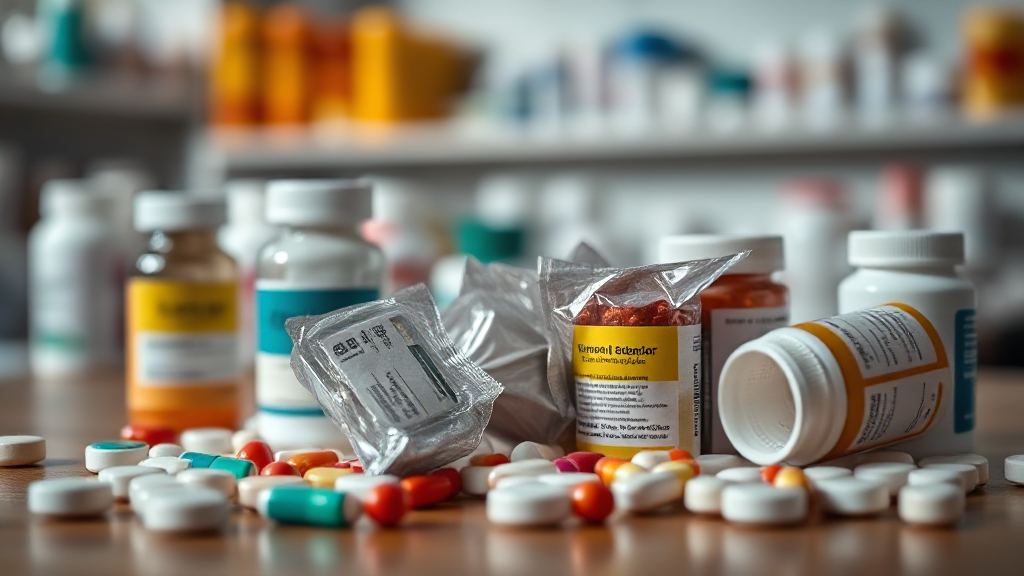
The accumulation of unused medicine is a structural feature of modern healthcare, not a personal failing. Prescriptions change when a patient does not respond to a first-line treatment. Chronic conditions go into remission. A relative passes away, leaving a cabinet full of sealed boxes. Pharmacies sell multi-packs at a discount, and patients buy the larger size only to use a fraction of it. Online orders sometimes arrive with duplicate items after a delivery error.
In each case, the medicine remains sealed, within its expiration window, and legally purchased. Throwing it away feels wasteful. Keeping it indefinitely serves no purpose and slowly converts a useful product into expired waste. This is the practical starting point for anyone considering how to sell unused medicines: the supply exists in enormous volume, and it exists in a form that is still usable if handled correctly.
There is also an economic dimension. Medicines are expensive, and a sealed package represents real money that has already been spent. Recovering part of that value is rational for the seller. For the buyer — whether an individual, a pharmacy, or a redistribution service — acquiring sealed medicine below retail price expands access. The transaction, when done properly, benefits both sides.
The Preliminary Photo Assessment: How Value Is Determined
The first practical step in selling unused medicines is almost always a preliminary assessment based on photographs. This is where the process begins, and it is also where most misunderstandings occur. A photo assessment is not a casual glance; it is a structured evaluation of several variables that together determine whether a package can be accepted and what it is worth.
The most important variable is packaging integrity. The box must be closed, the blister packs intact, the seal unbroken. A torn carton or a punctured blister changes the status of the medicine entirely, because sterility and stability can no longer be guaranteed. The second variable is legibility. The name of the active substance, the dosage, the manufacturer, the batch number, and the expiration date must all be clearly readable in the photograph. Blurred or partially obscured labels force a reassessment or a rejection.
The third variable is the remaining shelf life. A sealed package with eighteen months left is worth considerably more than one with two months left, even if both are technically valid. The fourth is demand. Some medicines are consistently sought after; others are niche or have been superseded by newer alternatives. A preliminary assessment weighs all four factors together rather than treating any one of them as decisive.
For the seller, the practical implication is straightforward: take clear, well-lit photographs of every side of the package, including the batch and expiration information, and submit them through the channel the service provides. The assessment that comes back is preliminary, not final — but it is usually accurate enough to tell the seller whether proceeding is worthwhile.
What Determines the Final Valuation of Sealed Medicines
Once a package passes the preliminary photo stage, a more detailed valuation takes place. This stage answers the question that matters most to the seller: what is this actually worth? Several factors combine to produce the final figure.
Active substance and therapeutic class. Medicines used in chronic or high-prevalence conditions tend to hold value better than those used in rare or one-off situations. The therapeutic class also affects storage requirements, which in turn affects logistics costs and therefore the net offer.
Dosage and package size. A full course in a single sealed box is generally more attractive than a partial course split across several boxes, even if the total quantity is the same. Larger sealed units reduce handling and simplify redistribution.
Manufacturer and origin. Origin matters for regulatory and quality-assurance reasons. Documentation of legitimate purchase is helpful, and packages with traceable provenance are easier to accept.
Remaining shelf life. The longer the remaining validity, the more flexibility the buyer has in redistributing the medicine. Short-dated stock can still be accepted, but the offer reflects the narrower window.
Storage history. Medicines that have been kept in a cool, dry place are preferred over those stored near heat or moisture. While a photograph cannot prove storage conditions, the overall condition of the packaging often provides clues.
It is worth being clear about what valuation is not. It is not a promise to buy at any price. It is not a retail refund. It is a negotiated figure that reflects the medicine’s realizable value in a secondary setting, minus the costs of verification, logistics, and redistribution. Sellers who understand this arrive at the process with realistic expectations, which makes the conversation faster and more productive.
A Mid-Article Recap: The Core Logic of Selling Unused Medicines
Before moving into logistics and safety, it is useful to consolidate what has been established. The supply of unused sealed medicines in Russia is large and continuous. The process begins with a photo assessment that checks packaging integrity, label legibility, remaining shelf life, and demand. A successful preliminary assessment leads to a detailed valuation that weighs substance, dosage, manufacturer, shelf life, and storage history. The final figure is a negotiated value, not a retail refund, and it reflects the costs of verification and redistribution.
Everything that follows — logistics, safety rules, and social impact — rests on this foundation. If the valuation stage is handled honestly and the packaging is genuinely sealed and legible, the rest of the process tends to run smoothly. If it is not, no amount of efficient logistics will rescue the transaction.
Logistics: How Medicines Move Across Russia
Russia’s geography is a logistical fact that shapes every part of this process. A service that operates nationwide cannot rely on local handovers alone. It needs a system that works whether the seller is in a major city or a remote settlement.
The typical flow begins with remote contact. The seller submits photographs and basic information through a messaging channel. After a preliminary assessment, the parties agree on an approximate value and the conditions of transfer. Depending on the arrangement, the medicine may be collected, shipped, or handed over at an agreed point. Packaging for transport must protect the seals and keep the medicines within acceptable temperature ranges where relevant.
Documentation matters at this stage. Keeping a record of what was sent, when, and in what condition protects both parties. For larger volumes — such as surplus stock from a pharmacy or a medical institution — the logistics are more formal, often involving batch-level records and scheduled collection.
The efficiency of this system depends heavily on clear communication. A seller who provides accurate photographs and honest descriptions shortens the process considerably. A seller who overstates condition or omits information creates delays and, in the worst case, a rejected shipment. The logistics stage is where the honesty of the valuation stage is tested.
Safety, Legality and Ethical Standards
Any serious discussion of selling unused medicines has to address safety directly. Medicines are not ordinary consumer goods. They affect health, and a mistake in handling can cause harm. Several standards are non-negotiable.
Sealed packages only. Opened, used, or partially used medicines should never enter a redistribution channel. Once a seal is broken, the medicine’s integrity can no longer be assured, regardless of how carefully it was stored.
Clear traceability. Batch numbers, expiration dates, and manufacturer information must be legible and consistent. This allows the receiving party to verify that the medicine is what it claims to be.
No misrepresentation. Sellers must describe the condition of the medicine accurately. Hiding damage, tampering, or improper storage is both unethical and, in many cases, unlawful.
Respect for regulatory limits. Rules governing the circulation of medicines vary, and some categories are restricted or prohibited from secondary transfer. A responsible service screens for these categories during assessment.
Confidentiality. Medical information is sensitive, and sellers should not be required to disclose more about their personal health than is necessary to complete the transaction.
Ethically, the underlying principle is simple: redistribution should increase access to safe medicine, not create new risks. Every step — assessment, valuation, transport, and final placement — exists to serve that principle. When any step is skipped, the entire chain becomes unsafe.
Social Impact: Redistribution as a Form of Access
The social dimension of this practice is often overlooked, but it is arguably the most important part. When sealed, unexpired medicines are redistributed instead of discarded, several things happen at once.
First, waste is reduced. Medicines that would have expired on a shelf and then been destroyed instead reach someone who needs them. Second, access expands. People who cannot easily afford certain medicines may be able to obtain them through secondary channels at lower cost. Third, the environmental burden of pharmaceutical disposal is reduced, since fewer medicines need to be incinerated or otherwise processed as waste.
There is also a community dimension. In smaller towns and remote areas, where pharmacy stock can be limited, a redistribution network can fill gaps that the formal supply chain does not reach. This is not a replacement for the healthcare system, and it should never be presented as one. It is a complementary mechanism that recovers value and utility from products that already exist.
For pharmacies and medical institutions with surplus stock, the same logic applies at a larger scale. Surplus that sits in storage until expiration is a pure loss. Surplus that is redistributed recovers some value and serves a public good. The motivation is not purely charitable — it is also practical and economic — but the outcome benefits both the institution and the recipients.
Frequently Asked Questions
Can I sell medicines that have already been opened?
No. Only sealed, unopened packages with intact blister packs and unbroken seals are suitable for redistribution. Once a package is opened, the medicine’s integrity can no longer be guaranteed, and accepting it would create a safety risk. If you are unsure whether a package counts as sealed, take a clear photograph and ask for an assessment before proceeding.
How long does the assessment and sale process take?
The preliminary photo assessment is usually the fastest part and can often be completed within a short exchange of messages. The full process — valuation, agreement, and transfer — takes longer and depends on the volume of medicine, the accuracy of the photographs, and the logistics involved. Larger consignments from institutions naturally take more time than a single household package.
What information do I need to provide about the medicines?
You will need clear photographs showing the package from multiple angles, including the name of the active substance, the dosage, the manufacturer, the batch number, and the expiration date. All of this information must be legible. You should also be prepared to describe how the medicines have been stored and to confirm that the packages are sealed and unopened.
Is it legal to sell unused medicines in Russia?
Rules governing the circulation of medicines are complex, and some categories are restricted or prohibited from secondary transfer. A responsible service screens for these categories during assessment and will decline anything that cannot be handled lawfully. Sellers should always provide accurate information and should not attempt to circumvent restrictions.
What happens to the medicines after I sell them?
After transfer, the medicines enter a redistribution channel where they are verified and then made available to parties who need them. The purpose of the entire process is to increase access to safe, sealed, unexpired medicine and to reduce the waste that would otherwise occur when usable products are discarded.
Conclusion: A Structured Approach to a Complex Subject
Selling unused sealed medicines is not a single action but a chain of decisions. It begins with recognizing that a sealed package still has value. It continues through a photo assessment that checks integrity, legibility, shelf life, and demand. It moves into a valuation that weighs substance, dosage, origin, and storage history. It depends on logistics that can function across the whole country. It is governed by safety and legal standards that cannot be compromised. And it produces a social benefit that extends beyond the individual transaction.
For the reader who wants one thorough reference rather than several short pieces, the through-line is this: the process works when every stage is handled honestly and carefully. Sellers who provide accurate photographs, describe conditions truthfully, and respect the safety rules make the system faster and safer for everyone. Buyers and redistribution services that apply consistent standards protect the integrity of the channel. Together, these practices turn a cabinet full of unused medicine into something useful — recovered value for the seller, expanded access for the recipient, and less waste for everyone.